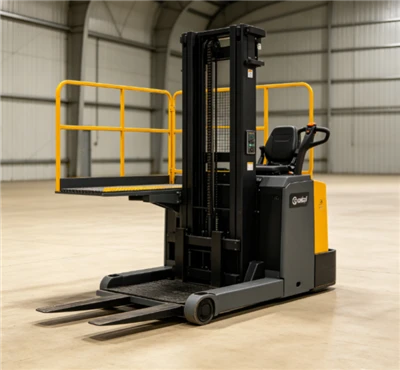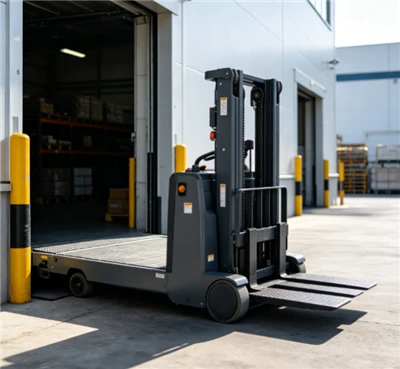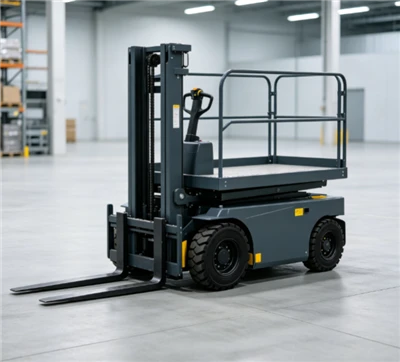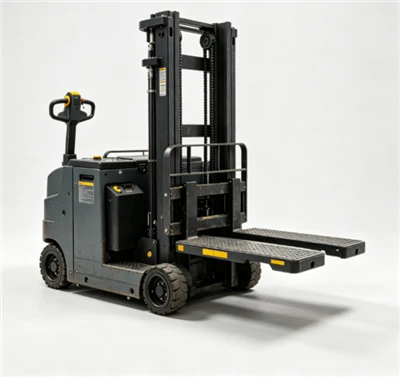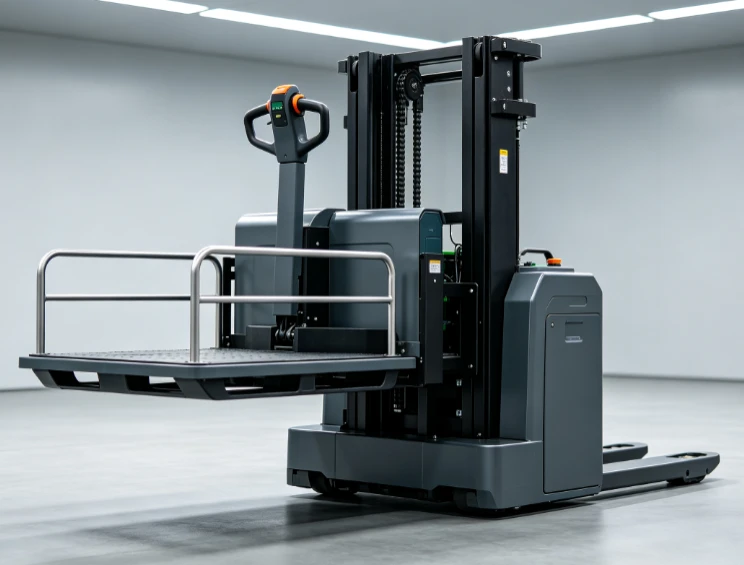
A Lithium-Ion Platform Pallet Truck integrates an electric traction motor, a hydraulic lifting mechanism, a lithium-ion power pack, and an operator standing platform into a single chassis.
The operator stands on the platform while controlling travel, steering, lifting, lowering, and braking through the control handle. This setup eliminates the need for continuous walking alongside the machine, making it efficient for moving goods across longer internal transfer paths.
It is strictly a horizontal transport machine rather than a vertical stacking forklift. The forks lift the pallet just clear of the floor to transfer it between locations. For vertical storage or high-tier racking, a pallet stacker or counterbalance forklift is required.
Technical Specifications
|
Specification |
Why It Matters |
|
Rated Load Capacity |
Determines the maximum permissible pallet weight for the selected configuration. |
|
Load Center |
Affects actual load capability when weight distribution varies from standard conditions. |
|
Fork Length & Width |
Must match pallet entry depth, spacing, and international pallet standards. |
|
Min. / Max. Fork Height |
Critical for low-clearance pallet entry and ground clearance during transit. |
|
Battery Voltage & Capacity |
Dictates electrical system compatibility and runtime duration between charges. |
|
Charger Specification |
Ensures compatibility with local grid voltage, frequency, and plug types. |
|
Travel Speed |
Influences handling efficiency; must be evaluated against aisle congestion and safety rules. |
|
Turning Radius & Dimensions |
Determines maneuverability in tight warehouse aisles, lifts, and loading areas. |
|
Brake System |
Essential for stopping performance, especially on ramps or loading dock inclines. |
|
Service Weight |
Important for floor load limits, mezzanine restrictions, and freight calculations. |
Lithium-Ion Power System Architecture
Battery selection directly defines the operational profile of the equipment. A lithium-ion configuration suits environments requiring high daily utilization and flexible intermediate charging opportunities.
Key Procurement Factors
Battery Voltage & Capacity: Must match the electrical architecture and required working hours.
Battery Chemistry & Pack Configuration: Determines energy density and discharge stability.
Charger Specification: Must align with the battery management system and the destination market's electrical supply.
Charging Schedule: Evaluation of opportunity charging vs. full-shift discharge cycles.
Ambient Operating Temperature: Important for cold-chain or unheated warehouse environments.
Ergonomics and Operator Safety
Safety compliance and operator comfort directly influence facility productivity and risk management.
Protective Side Arms: Side barriers or folding protective arms provide physical support for the operator during transit.
Emergency Reversal Function: The control head features an anti-collision belly button switch that instantly reverses the truck's travel direction if pressed against an obstacle.
Automatic Braking: Electromagnetic regenerative braking engages automatically when the control handle is released or returned to the vertical/horizontal braking position.
Non-Slip Platform: Textured standing platform surface prevents footing slippage in dusty or wet operating conditions.
Manufacturing, Assembly, and Quality Control
Supplier evaluation should focus on structural integrity, component sourcing, and rigorous testing protocols rather than general marketing claims.
Structural Inspection: Forks, chassis, and standing platforms undergo dimensional checks and weld integrity inspections prior to assembly.
Hydraulic System Testing: Hydraulic circuits are tested for lifting capacity, lowering control, pressure retention, and leak prevention.
Electrical & Control Verification: Wiring harnesses, controller programming, battery management integration, and emergency cut-off functions are tested.
Drive & Performance Testing: Completed units undergo dynamic testing for traction, steering response, braking performance, and noise levels.
Export Packaging and Logistics
Equipment destined for international transport requires secure crating or skid stabilization to prevent transit damage.
Export Protection: Units are secured on reinforced wooden skids or crates, wrapped with protective film, and braced to prevent shifting inside containers.
Container Optimization: Chassis dimensions and battery pack configurations are calculated to maximize container space utilization and reduce freight costs.
Documentation: Standard export documentation, packing lists, and certificates of conformity are prepared in accordance with destination-market regulations.
FAQ
Hot Tags: lithium-ion platform pallet truck, China lithium-ion platform pallet truck manufacturers, suppliers, factory